5 Things to Check Before Buying Polymer Raw Materials

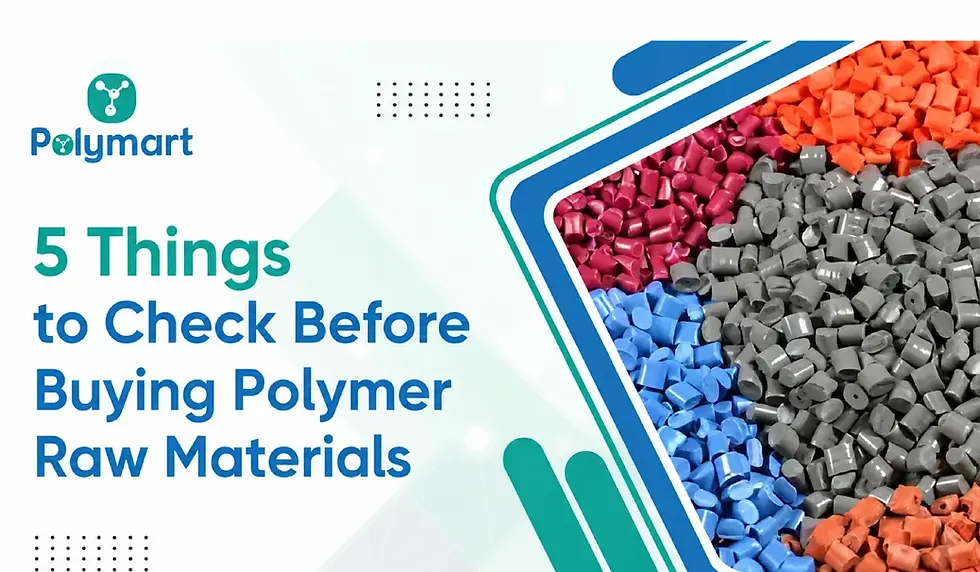
Buying polymer raw materials is not simply about finding the lowest price. The wrong grade, inconsistent quality, delayed delivery, or unsuitable material can affect production efficiency and the performance of the finished product. For manufacturers, procurement managers, packaging businesses, and industrial buyers, choosing materials carefully can make a significant difference to overall purchasing decisions. Whether you source locally or are exploring how to buy polymer raw materials online, it is important to evaluate the material and supplier from several angles. Here are five practical checks to make before placing an order.
Key Highlights
Match the polymer grade with the application and manufacturing process.
Check technical specifications and batch-to-batch consistency.
Compare the complete procurement cost rather than only the quoted price.
Evaluate supplier reliability, availability, and delivery capability.
Use digital marketplaces to discover and compare polymer sourcing options.
1. Check the Polymer Grade and Specifications
The first step is making sure the material is suitable for your specific application. Different polymers have different properties, processing characteristics, and performance levels. Common materials include HDPE, LDPE, LLDPE, PP, PVC, PET, ABS, nylon, and polycarbonate.
For example, a packaging manufacturer may prioritize flexibility, clarity, or barrier performance, while an automotive component manufacturer may require greater impact resistance, dimensional stability, or heat performance. The manufacturing process matters too. A material used for injection moulding may have different requirements from one used for extrusion.
Before purchasing, check the polymer grade, melt flow characteristics, mechanical properties, processing requirements, and technical specifications. Understanding Polymer Processing can also help buyers connect material characteristics with their manufacturing requirements.
2. Evaluate Material Quality and Consistency
After identifying the appropriate grade, examine the quality and consistency of the material. Polymer granules should match the specifications required for the intended application and manufacturing process. Product information, technical data, appearance, and other available specifications can help buyers assess whether a material is appropriate.
Consistency between batches is especially important for manufacturers operating regular production cycles. Significant variations in material characteristics may affect processing conditions and the performance of finished products.
Before committing to a larger purchase, compare the available technical information with your production requirements. Good polymer procurement practices focus on suitability and consistency rather than relying on price alone.
3. Compare Price, Availability and Total
Procurement Cost
A low quotation does not necessarily mean a lower overall purchasing cost. Transportation charges, order quantities, delivery schedules, availability, and lead times can all affect what you actually spend on sourcing materials.
For example, a supplier offering a slightly lower material price may not provide the best value if delivery takes longer or the material is difficult to obtain for repeat orders. Regular buyers should also consider whether the supplier can maintain reasonable consistency across future purchases.
When comparing Polymer Suppliers India, look beyond the initial quotation. Consider material price, quantity, transportation, availability, delivery time, and repeat-order requirements to get a clearer picture of the total procurement cost.
4. Check the Supplier's Reliability
Supplier reliability can have a direct impact on manufacturing schedules. Before choosing a supplier, examine the quality of product information, communication, availability, delivery capability, order transparency, and customer support.
A dependable Polymer Distribution Company should provide clear information about available materials and make the purchasing process easy to understand. Buyers should also consider how quickly the supplier responds to questions and whether material availability can support their expected purchasing schedule.
It is useful to compare suppliers based on the complete buying experience rather than selecting one solely because of the lowest price. Strong communication and dependable supply can be valuable when businesses need to place repeat or bulk orders.
5. Consider Buying Through a Digital Marketplace
Digital platforms have made it easier for industrial buyers to discover different materials and supplier options. An online polymer marketplace can bring product categories and sourcing information together, helping buyers spend less time searching through individual sources.
For businesses looking to Buy Polymers Online, digital platforms can simplify material discovery, supplier comparison, and procurement research. Buyers can explore categories such as HDPE, PP, PVC, PET, and other industrial materials while considering their specific requirements.
A digital marketplace can also make sourcing more convenient for businesses that need to compare multiple options. However, buyers should still review grade, specifications, availability, pricing, and delivery details before making a purchasing decision.
Final Thoughts
Choosing polymer raw materials requires a balanced approach. The right decision comes from evaluating grade, quality, price, availability, and supplier reliability together rather than focusing on a single factor.
A structured purchasing process can help manufacturers reduce material-selection mistakes and make sourcing decisions with greater confidence. For businesses exploring a more convenient way to discover polymer materials and supplier options, PolyMart provides a digital platform designed around polymer sourcing and marketplace-based procurement.
FAQs
What should I check before buying polymer raw materials?Check the polymer grade, technical specifications, material quality, consistency, pricing, availability, delivery requirements, and supplier reliability.
How do I choose the right polymer grade?Consider the intended application, required material properties, manufacturing process, and technical specifications before selecting a grade.
How can I find reliable polymer suppliers in India?Compare suppliers based on product information, communication, availability, delivery capability, experience, and consistency rather than price alone.
Is it possible to buy polymer raw materials online?Yes. Online marketplaces can help buyers discover materials, compare supplier options, and simplify the initial sourcing and procurement process.


Comments